
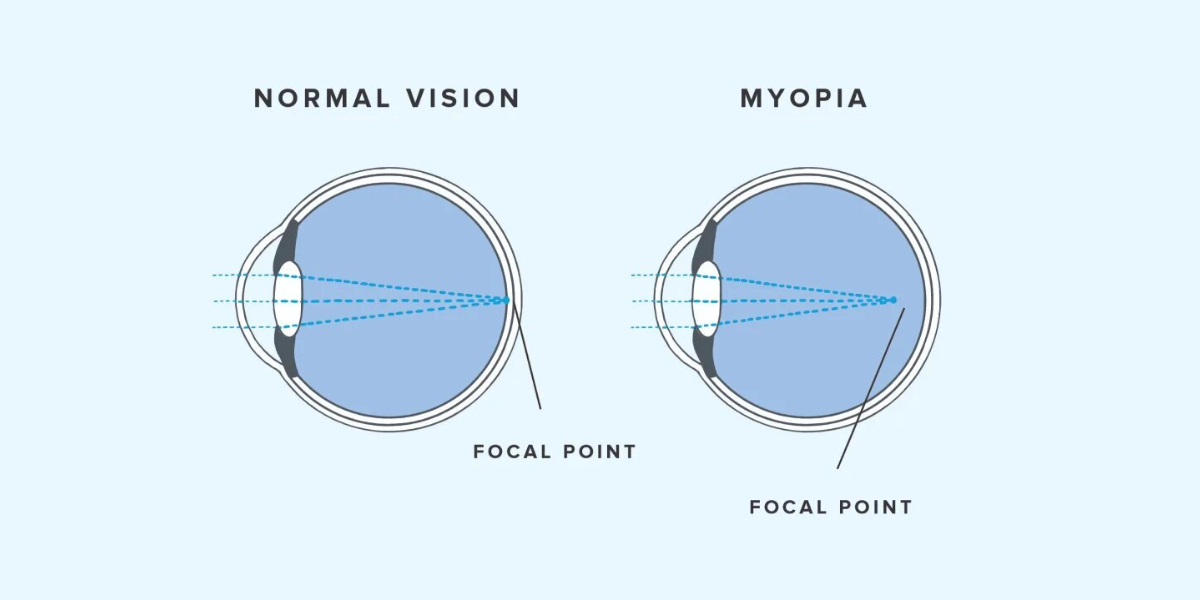
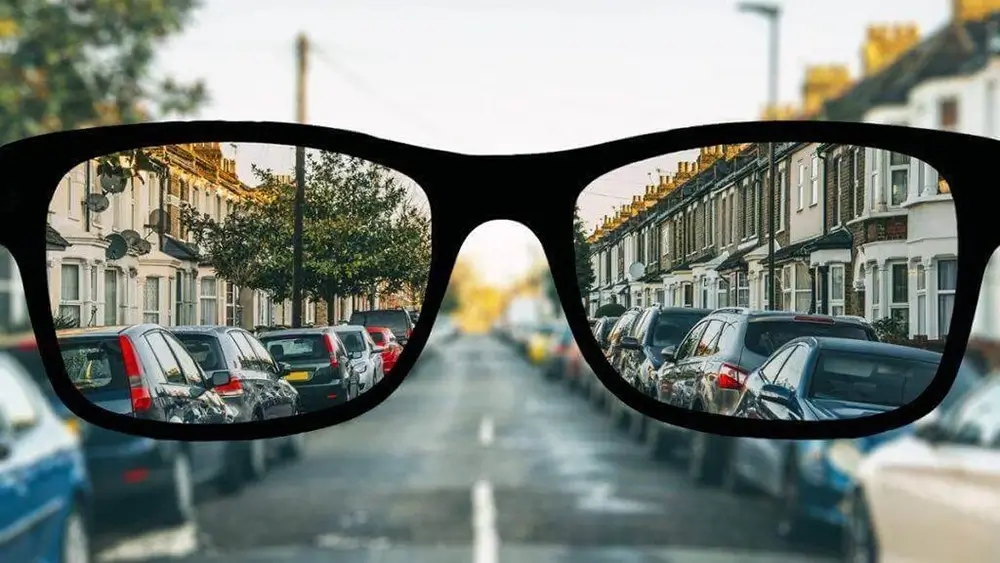
Myopia, or nearsightedness, is a common refractive vision condition in which distant objects appear blurry while near objects remain clear. This occurs when the shape of the eye causes light to focus in front of the retina rather than directly on it—often due to an elongated eyeball or an overly curved cornea or lens. People with myopia may have no trouble reading a book or viewing a phone screen up close, but objects such as road signs, television screens, or distant scenery can appear fuzzy and difficult to discern.
What causes myopia?
Myopia can develop during childhood, adolescence, or adulthood and can be caused by a variety of factors, some of which are uncontrollable.
Prolonged near work
Engaging in continuous close-up activities such as reading, drawing, using computers, playing video games, or browsing on smartphones and tablets increases the strain on the eyes, which can trigger the onset or progression of myopia. As digital devices become more common in children’s daily lives, they are exposed to close-up work earlier and more frequently, raising their risk of developing myopia.
Genetic predisposition
If one parent is nearsighted, a child’s risk of developing myopia increases significantly; if both parents are myopic, the risk is even higher. Certain populations, such as those of Asian descent, have been observed to have higher rates and faster progression of myopia compared to the global average.
Inappropriate vision correction
Wearing glasses with inaccurate prescriptions—whether undercorrected or overcorrected—can place extra strain on the eyes and may accelerate the progression of myopia. Not wearing corrective lenses when needed can also keep the eyes in a constant state of stress, affecting eye development.
Lack of outdoor light and activity
Research indicates that children and adolescents who spend more time outdoors, receiving sufficient natural light, are less likely to develop myopia and may experience slower progression. This may be related to the higher light intensity outdoors, greater opportunities to focus on distant objects, and relaxation of the eye muscles.
Myopia Symptoms
Aside from blurred distance vision, other common signs may include:
- Squinting to improve focus on faraway objects
- Eye strain or discomfort after looking into the distance
- Frequent headaches caused by visual strain
- Increased difficulty seeing clearly at night
- Fatigue during activities that require distance vision, such as driving or playing sports
Children with myopia may not realize their vision is impaired, but certain behaviors can be warning signs, such as sitting very close to the television, holding reading materials unusually close, rubbing their eyes often, blinking excessively, or losing focus during schoolwork.
While mild myopia is common and can be easily corrected with glasses, contact lenses, or refractive surgery, an eye exam is essential for proper diagnosis and treatment. Detecting the condition early can help prevent it from worsening and protect long-term eye health.
Types of Myopia
Most people with myopia have a degree of nearsightedness that can be easily detected and managed through a routine eye exam. The prescription will indicate the severity of the condition, typically shown as a negative number in diopters. Myopia can be classified into several categories:
Mild Myopia (Low Myopia) – Usually ranging from around -0.50 to -6.00 diopters, this level of myopia is common and can be effectively corrected with glasses or contact lenses.
High Myopia – Generally defined as a prescription stronger than -6.00 diopters. High myopia can cause more significant visual impairment and raises the risk of serious eye conditions such as glaucoma, cataracts, and retinal detachment.
Degenerative Myopia (Pathological or Progressive Myopia) – Occurs when the eyeball becomes so elongated that it causes thinning of the sclera (the white of the eye) and retina. This condition increases the likelihood of retinal diseases, abnormal blood vessel growth, glaucoma, and cataracts.
Bilateral Myopia – Refers to myopia affecting both eyes, though the degree of nearsightedness may differ between them, which is entirely normal.
Both high and degenerative myopia require careful monitoring through regular eye exams, as early detection and proper management can help reduce the risk of long-term vision complications.
How Is Myopia Tested?
Myopia can be detected during a routine comprehensive eye exam. The process typically involves several steps to assess how well your eyes focus light and to determine the exact lens prescription you may need.
The exam often begins with a visual acuity test using a Snellen chart — a board or poster displaying rows of letters that decrease in size from top to bottom. You’ll be asked to read the smallest line you can see clearly without corrective lenses, which helps measure your uncorrected vision.
Next, your eye care professional may use a phoropter, an instrument containing multiple lenses. By switching between lens options and asking which provides the clearest view, they can fine-tune your prescription.
Additional tools may be used for more precise measurements. For example, a retinoscope shines light into your eyes to evaluate how it reflects off your retina, helping determine the refractive error. An autorefractor can also measure how your eyes bend light automatically, providing an initial prescription estimate.
Through these tests, your optometrist or ophthalmologist can identify the degree of myopia and recommend the most suitable corrective lenses or treatment options.
Myopia Treatment Options
There are several effective ways to manage myopia, all aimed at correcting vision and improving daily quality of life. The best option depends on the severity of the condition, lifestyle needs, and personal preference.
Prescription Glasses
For many people, prescription glasses are a simple and convenient solution. They not only correct vision but also offer a chance to express personal style, from sleek rectangular frames to bold cat-eye glasses designs. Depending on your prescription and how myopia affects your routine, you may wear glasses full-time or only when looking at distant objects, such as while driving or watching a presentation. High-index lenses may be recommended for stronger prescriptions, as they are lighter and thinner than standard plastic lenses.
Contact Lenses & Orthokeratology (Ortho-K)
Contact lenses can provide a wider field of vision and are often preferred for sports or active lifestyles. Orthokeratology, or Ortho-K, involves wearing specially designed rigid lenses overnight to gently reshape the cornea, temporarily reducing or eliminating the need for glasses during the day. However, the effect is reversible—if you stop wearing the lenses, the cornea gradually returns to its original shape.
Refractive Surgery
Procedures like LASIK and PRK reshape the cornea to correct myopia, offering a long-term alternative to glasses or contacts. For patients with very high prescriptions or corneas that are too thin for laser surgery, implantable collamer lenses (ICLs) may be an option. These artificial lenses are placed in front of the eye’s natural lens to improve focus.
Because surgery carries higher costs and potential risks, it should only be performed by a qualified ophthalmologist after a thorough evaluation. Regardless of the treatment chosen, regular eye exams remain essential to monitor vision health and ensure the correction method continues to meet your needs.
Conclusion: Myopia Is a Common and Manageable Condition
Myopia is one of the most common vision issues worldwide, and for most people, it’s nothing to fear. Understanding how it develops not only helps you take better care of your eyes but can also make conversations about vision health more insightful. With today’s wide range of correction options—many of which are both functional and stylish—you can address nearsightedness while expressing your personal style. As more people around the globe experience myopia, being informed means you’re ready to share practical advice and help others see the world more clearly.
FAQ
Can Myopia Be Prevented?
While there’s currently no guaranteed way to prevent myopia, adopting healthy visual habits can help slow its progression and reduce the likelihood of developing it in the first place. Research suggests that children who spend more time outdoors—exposed to natural light and focusing on distant objects—tend to have a lower risk of becoming nearsighted.
Ongoing studies continue to explore methods for controlling childhood myopia. Promising approaches include:
Orthokeratology (Ortho-K) lenses – Special rigid contact lenses worn overnight can temporarily reshape the cornea and may help slow eye elongation, which is linked to myopia progression.
Low-dose atropine eye drops – Prescribed by pediatric eye specialists, these drops have been shown to slow the rate of myopia development in some children, though further research is needed to understand their mechanism fully and why they may be less effective for certain individuals.
Multifocal contact lenses – Specially designed lenses with different focusing zones can reduce eye strain and have been found to help slow the progression of nearsightedness in children.
Combining regular outdoor activity with appropriate early interventions can make a significant difference in managing myopia risk, particularly for children with a family history of the condition.
Can myopia be cured?
No, myopia cannot be cured. Once established, it is permanent. However, it can be managed and corrected through the various treatments listed above.
Can Myopia Lead to Blindness?
While most cases of myopia are easily managed with corrective lenses or other treatments, severe or untreated myopia can increase the risk of serious eye diseases that may cause vision loss. People with high myopia are more prone to developing conditions such as cataracts, glaucoma, and myopic macular degeneration—each of which can significantly impair vision if left untreated. Regular eye examinations and timely intervention are essential to protect long-term eye health and reduce the risk of vision-threatening complications.


