
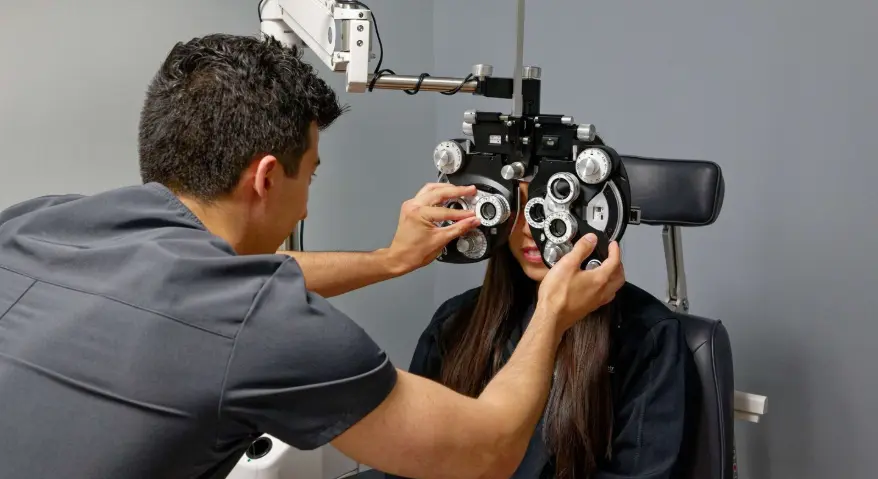
A comprehensive eye exam is much more than a simple vision test. It's a systematic and in-depth assessment that provides a comprehensive understanding of your visual function and eye health. Through a series of specialized examination steps, your optometrist or ophthalmologist will not only measure your visual acuity and refraction, but also assess the intraocular structures and intraocular pressure, and screen for conditions that may affect vision, such as glaucoma, cataracts, macular degeneration, and diabetic retinopathy.
Many people may feel a little uneasy at the thought of someone "closely examining their eyes"—and that's a natural reaction. However, this kind of professional, up-close-and-person approach is crucial for your eyes. A qualified optometrist possesses extensive medical knowledge and expertise, enabling them to detect early problems through a comprehensive eye exam and provide targeted treatment or referral recommendations when necessary.
If you've never had a complete eye exam, or have only had a basic vision test, understanding the process and significance of a comprehensive eye exam will help you better understand why it's a crucial step in maintaining lifelong vision health. Below, we'll take a closer look at what a standard comprehensive eye exam includes and why each step is so important.
The Difference Between a Comprehensive Eye Exam and a Routine Eye Exam
When making an eye exam appointment, be sure to clearly explain to your doctor or clinic that you require a comprehensive eye exam, not just a routine vision test. The two exams have completely different purposes and depth.
A routine eye exam typically focuses on visual acuity assessment and refraction measurement to determine whether glasses or contact lenses are necessary. A comprehensive eye exam, on the other hand, is more systematic and in-depth. In addition to testing vision, it also includes a comprehensive screening of key areas such as the eye structure, intraocular pressure, retina, and optic nerve to help identify early conditions that may affect vision or overall health, such as glaucoma, cataracts, macular degeneration, and diabetic retinopathy.
Preparing for a Comprehensive Eye Exam
To ensure a smooth exam and accurate results, we recommend the following preparations before your appointment:
Medical History: Bring your personal and family eye and general health history so your doctor can understand potential risks.
Symptom Log: List any recent eye or visual discomfort you've experienced, such as blurred vision, dryness, double vision, or flashing lights. Medication List: Include all current prescription and over-the-counter medications, as well as nutritional supplements, as some medications may affect eye health.
Vision Insurance Information: If you have insurance, confirm coverage in advance so your doctor can provide you with an appropriate examination and treatment plan.
Current Corrective Lenses: Bring your current glasses or contact lenses so your doctor can assess your current prescription.
Sun Protection: Because a comprehensive eye exam may involve dilating your pupils, it's recommended that you bring sunglasses to minimize light sensitivity and temporary blurring of vision. If the exam is located far away, it's recommended that you have someone accompany you or drive for you.
Things to Avoid Before and After the Exam
For the most accurate exam results, please note the following:
Avoid Eye Strain: Minimize prolonged use of electronic devices or close reading before the exam to keep your eyes relaxed.
Get Adequate Sleep: A good night's sleep helps your eyes recover and prevents measurement errors caused by fatigue.
Allow Sufficient Time: The length of a comprehensive eye exam varies depending on the procedure. If a dilation procedure is included, vision recovery may take several hours. Avoid a tight schedule on the day of the exam.
By preparing properly and following these tips, you can not only make your eye exam go more smoothly but also ensure a more accurate and informative health assessment.
What Does a Comprehensive Eye Exam Include?
A comprehensive eye exam is a systematic, scientific evaluation process designed to provide a comprehensive understanding of your visual function and eye health. Your optometrist or ophthalmologist will use a variety of specialized instruments and testing methods to conduct a detailed assessment of the structure, function, and potential conditions of the eye. While the equipment may seem complex, the entire process is safe and painless, designed to provide you with the most accurate information about your visual health. The specific exam components vary based on your age, symptoms, and medical history, but generally include the following main components:
Vision and Refraction
1. Visual Acuity Test
This is the most basic and widely known test, used to assess your visual clarity. Your doctor will use a Snellen chart, which requires you to read letters or symbols arranged from largest to smallest at a specific distance to determine your visual acuity, both uncorrected and corrected. Your distance, near, and peripheral vision may also be tested to provide a comprehensive understanding of your visual function.
2. Refraction Test
This test is used to determine whether corrective lenses are necessary and the correct prescription. Your doctor will use a phoropter to compare different lenses and see which provides the best vision. This will help determine your degree of nearsightedness, farsightedness, astigmatism, or presbyopia.
In some cases, your doctor may also use an autorefractor or retinoscope for preliminary measurements. A manual ophthalmoscope will then be used to make precise adjustments to ensure an accurate and comfortable prescription.
Binocular Coordination and Eye Movement Assessment
1. Ocular Motility Test
Your doctor will ask you to follow a moving target with your eyes to assess the coordination of the muscles that control eye movement.
2. Cover Test
This test involves alternating covers between your eyes and observing eye movements while focusing on a target. This test is used to screen for strabismus (commonly known as "crossed eyes") and other abnormalities in binocular coordination.
3. Stereopsis and Depth Perception Test
Your doctor may use 3D images or special glasses to assess your spatial and depth perception, which are crucial for driving, sports, and everyday visual judgment.
Eye Health Assessment
1. Pupil Response Test
The pupil's contraction and dilation in response to light stimulation are observed to assess neurological and ocular reflex function.
2. Slit-Lamp Examination
A slit lamp is a high-powered microscope that allows doctors to clearly view the anterior segment of the eye, including the cornea, conjunctiva, iris, lens, and eyelids. It can be used to detect abnormalities such as cataracts, corneal damage, infection, or inflammation.
3. Tonometry
This test measures intraocular pressure (IOP) to assess the risk of glaucoma. Common measurement methods include non-contact airflow tonometer (which does not require contact with the eye) and applanation tonometer (which measures pressure by gently touching the ocular surface). Some doctors may also use a rebound tonometer for rapid testing.
4. Fundus Examination (Ophthalmoscopy)
The doctor will use an ophthalmoscope or slit lamp with magnification to examine the fundus structures, including the retina, macula, blood vessels, and optic nerve. Mydriatic drops are often used to dilate the pupil for a clearer view. Some clinics are equipped with non-mydriatic fundus photography systems, which can quickly assess retinal health through imaging.
5. Visual Field Test
This test examines your peripheral vision to assess for blind spots or visual field defects. This is important for the early diagnosis of conditions such as glaucoma.
6. Color Vision Test
The commonly used Ishihara color vision test can identify red-green color blindness or other color vision abnormalities. Color perception is assessed by identifying numbers or patterns composed of colored dots.
Contact Lens Fitting Assessment (If Applicable)
If you plan to wear contact lenses, your doctor will perform additional keratometry and corneal topography to ensure lens fit and comfort. A tear film assessment may also be performed to determine your risk of dry eyes.
Based on your lifestyle, frequency of contact lens wear, and visual needs, your doctor will recommend the most suitable lens type and may schedule a trial fitting and follow-up appointment.
Obtaining Eye Examination Results
After a comprehensive eye exam, your optometrist or ophthalmologist will discuss the preliminary findings with you in detail and explain the meaning of each test. This is an important time to understand your eye health—whether it's about vision, intraocular pressure, retinal health, or other potential issues—and to ask your doctor any questions.
Based on the exam results, your doctor will develop a personalized eye care plan. If any signs of an eye condition requiring ongoing monitoring or treatment (such as glaucoma, dry eye, or diabetic retinopathy) are found, your doctor will recommend an appropriate follow-up appointment or referral. Be sure to keep track of your next appointment and follow your doctor's follow-up recommendations.
Obtaining Your Prescription
If the exam results indicate that you need corrective lenses, your doctor will issue you a formal prescription for glasses or contact lenses. This prescription typically includes spherical lens power (SPH), cylindrical lens power (CYL), axis of focus (AXIS), pupillary distance (PD), and other necessary parameters. You are entitled to a copy of your full prescription and are free to purchase glasses at the clinic or through other reputable channels. We recommend keeping this document safe for future updates or review.
Choosing Your New Glasses
After receiving your prescription, you can begin selecting the right lenses and frames—the most anticipated part of your eye exam. Your doctor or optician can recommend suitable lens types based on your prescription and visual needs, such as blue light protection, photochromic, progressive addition, or anti-fatigue lenses. You can choose the style and material of your frames based on your face shape, style, and wearing habits.
Many clinics now offer in-person try-ons, and online eyewear is becoming increasingly popular. Virtual try-ons or at-home try-on tools allow you to easily preview how different frames will look on your face. Combined with your doctor's professional advice, you can find the perfect prescription for you.
Regular checkups protect your long-term vision.
A comprehensive eye exam isn't just about identifying vision problems; it's also a crucial part of maintaining eye health. Even if your vision is currently normal, regular checkups are essential to identify potential risks early. If you experience symptoms such as blurred vision, frequent blinking, dry eyes, headaches, or light sensitivity, schedule an eye exam as soon as possible.
Good vision is an important part of your quality of life. Regular, comprehensive eye exams not only help you maintain clear vision but also lay a solid foundation for long-term eye health.


