
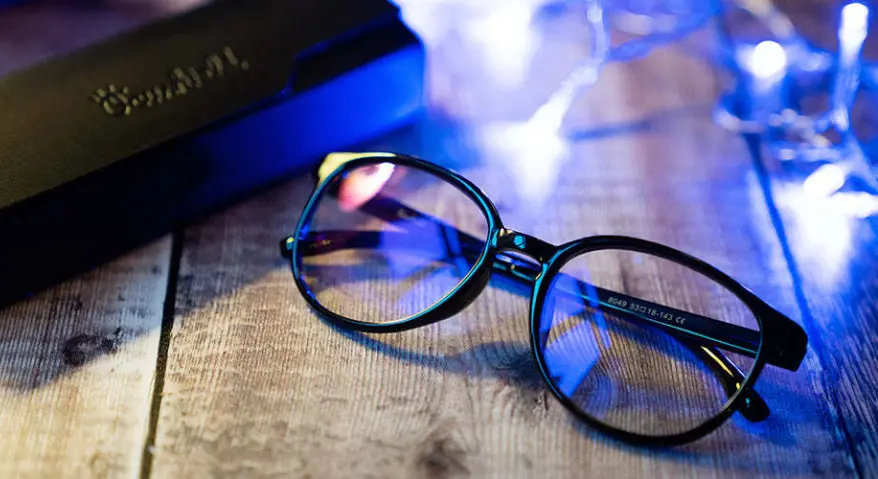
In modern society, electronic screens have become an indispensable part of our daily lives, but the resulting blue light exposure has also attracted increasing attention. Prolonged staring at digital devices such as computers, mobile phones, or tablets exposes the eyes to continuous high-intensity light stimulation, leading to discomfort such as dry eyes, temporary blurred vision, and photophobia. According to a survey report released by the Vision Council, approximately 80% of respondents reported experiencing varying degrees of digital eye strain.
Blue light-blocking glasses are designed to address this problem. Through special lens coatings or filtering technology, they effectively reduce the amount of high-energy short-wavelength blue light entering the eyes, thereby alleviating visual fatigue and the potential risk of sleep disorders caused by prolonged use of electronic screens. As people increasingly value visual health, these glasses that filter blue light from electronic devices are gradually becoming an important choice for eye protection.
What is Blue Light?
Blue light is a type of light with relatively high energy and a short wavelength in the visible spectrum, ranging from approximately 400 to 500 nanometers. Visible light consists of seven colors: red, orange, yellow, green, blue, indigo, and violet, which together constitute the "white light" we see. In nature, the sun is the primary source of blue light, while artificial light sources such as LED lights, fluorescent lights, computer monitors, smartphones, and tablets also emit varying levels of blue light.
Because of its short wavelength and concentrated energy, blue light can penetrate deeper into the eye's structure, reaching the retina. Some studies suggest that prolonged exposure to high-intensity blue light may trigger phototoxic reactions, increasing the risk of retinal cell damage. Although the intensity of blue light emitted by everyday electronic devices is far lower than that of sunlight, people are beginning to worry about its potential impact on eye health due to our prolonged close-range use of screens.
Furthermore, blue light is closely related to the human body's circadian rhythm (biological clock). Excessive exposure to blue light at night may suppress melatonin secretion, thus affecting sleep quality. To reduce the impact of blue light on eyes and sleep, modern electronic devices generally offer "night mode" or "blue light filtering mode." At the same time, specially designed blue light blocking glasses have also appeared on the market to filter out some high-energy blue light and relieve visual fatigue.
Is Blue Light Harmful to Eye Health?
Current scientific evidence suggests that blue light does not directly damage human eyes, but it may indeed have some impact on visual comfort and overall eye health. Blue light is short-wavelength, high-energy visible light that can penetrate the cornea and lens, reaching the retina at the back of the eye. Early animal studies showed that intense blue light exposure may cause phototoxic reactions in retinal cells, but to date, no research has confirmed that everyday blue light exposure causes structural damage to the human retina.
The American Academy of Ophthalmology (AAO) and several scientific reviews (including a systematic review published in 2022) have all pointed out that the intensity of blue light from electronic screens or artificial light sources is far lower than that of natural sunlight, insufficient to cause permanent retinal damage or increase the risk of macular degeneration. Therefore, the common public concern that "blue light can cause blindness" has no scientific basis.
However, blue light may still have some indirect effects. When staring at electronic screens for extended periods, people often blink less frequently, easily experiencing symptoms such as dry eyes, eye strain, and temporary blurred vision, known as "digital eye fatigue." These problems are not caused by blue light itself, but rather by eye habits, screen distance, and lighting environment.
Furthermore, blue light is involved in regulating the body's circadian rhythm (biological clock). Excessive exposure to blue light at night may suppress melatonin secretion and interfere with sleep quality. To reduce this effect, it is recommended to avoid using electronic devices two to three hours before bedtime, or to use features such as "night mode" or "eye protection mode" to reduce blue light intensity.
It is worth noting that some studies have even found that blue light may have positive effects during the day—such as improving attention, reaction speed, and cognitive performance. In conclusion, blue light is not "harmful light"; the key is to reasonably control exposure time and usage habits to balance its potential risks and benefits.
What are Blue Light Blocking Glasses?
Blue light blocking glasses are specially designed glasses whose lenses typically use filter coatings or optical materials to reduce the amount of high-energy, short-wavelength blue light entering the eyes. Compared to regular lenses, these lenses effectively filter some blue light in the wavelength range of approximately 400–500 nanometers while maintaining visible light transmittance, thus reducing the potential irritation to the eyes.
Blue light blocking lenses sometimes have a slight yellow or amber tint, which is a natural visual effect produced to neutralize some blue light wavelengths, but it is usually not noticeable during daily wear. Their main function is to reduce digital eye strain caused by prolonged use of electronic devices, such as dry eyes, soreness, and blurred vision. At the same time, by reducing nighttime blue light exposure, they can also help maintain a normal circadian rhythm, thereby improving sleep quality.
While blue light blocking glasses do not completely block blue light, nor do they need to be "completely shielded," as a visual health aid, they provide extra comfort and protection for the eyes in today's lifestyle of frequent electronic screen use.
Can blue light blocking glasses relieve eye strain?
Currently, there is insufficient scientific evidence to suggest that blue light-blocking glasses can effectively relieve eye strain caused by using electronic devices. Multiple studies and clinical evaluations show that blue light is not a major cause of digital vision strain. The American Academy of Ophthalmology (AAO) has also clearly stated that there is no conclusive evidence that blue light directly damages the eyes or causes visual discomfort; therefore, it is not recommended to rely on blue light blocking glasses as the primary means of relieving eye strain.
In fact, eye discomfort caused by prolonged use of devices such as computers, mobile phones, and tablets is mostly related to eye usage patterns, rather than blue light itself. For example, staring at a screen at close range for extended periods causes continuous tension in the eye muscles, and frequent focusing and accommodation easily lead to eye fatigue. Simultaneously, screen glare, uneven ambient light, and reduced blinking frequency can also cause symptoms such as soreness, dryness, or blurred vision.
To effectively relieve digital vision strain, experts recommend the following methods:
- Maintain a suitable distance and angle: Place the screen about an arm's length away from your eyes, slightly below eye level.
- Follow the "20-20-20" rule: Every 20 minutes of screen time, look at an object 20 feet (about 6 meters) away for 20 seconds to rest your eyes.
- Improve your eye environment: Adjust screen brightness and contrast to avoid strong light reflections or glare.
- Keep your eyes moist: If your eyes are dry, use artificial tears as needed.
- Take breaks from screens: Give your eyes ample time to relax; if necessary, switch to glasses instead of contact lenses.
If you want to reduce your exposure to blue light, a good pair of blue light-blocking glasses can help. However, they cannot replace daily eye care. If you want to relieve eye strain caused by digital products, you should maintain healthy eye habits and take regular breaks.


