
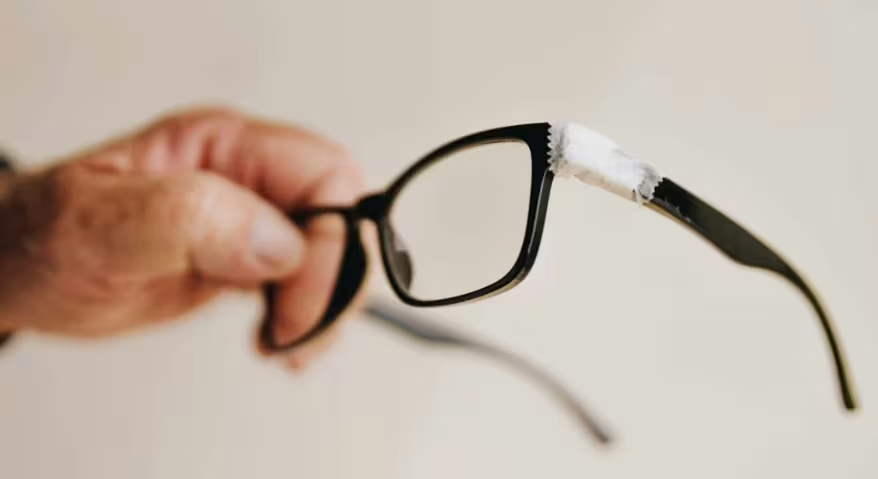
For those who are nearsighted, glasses are like a second pair of eyes; without them, daily life and outings become incredibly difficult. Therefore, when glasses suddenly suffer a crisis—such as a cracked frame, broken temples, or even the nose bridge breaking in two—it's not just a broken accessory; it directly affects our normal vision.
When faced with damaged glasses, our first concern is: can they be repaired? Simply put, in most cases, they can be repaired, but we generally recommend leaving them to a professional optician or repairman. To help you quickly handle such emergencies, this article will objectively analyze the damage to different parts of the glasses, providing you with a practical and clear guide to glasses repair and maintenance.
What to do if your glasses break?
When your glasses are damaged, the first thing to do is to check the specific damaged parts and the extent of the damage. You can observe whether it's a tiny screw that's fallen off or a major problem like a completely broken frame. Accurately assessing the damage will help you decide whether it's a minor issue that can be fixed in minutes or a complex problem that requires professional help.
While there are many tutorials online for repairing glasses yourself, it's important to be aware that attempting repairs at home often carries the risk of further damage. Many makeshift fixes are not robust and may even completely ruin glasses that could have been salvaged.
Therefore, it's crucial to fully understand the correct procedures before deciding to try to repair them yourself. However, in most cases, to ensure wearing comfort and vision health, we recommend replacing the frames or visiting a professional optician for a professional inspection and repair by an optometrist or repair technician.
Repair Techniques for Common Eyeglass Frames
Before attempting to repair your glasses with tools, it's essential to understand the frame material. Different materials require completely different handling methods. Here are practical tips for two of the most common frame types:
Daily Adjustment and Maintenance of Metal Frames
Minor Adjustments: If the metal frame or nose pads are only slightly warped, you can try gently pressing them back into place with appropriate force. Remember: Excessive force can easily cause metal fatigue and break them completely.
Breakage Handling: If the metal frame has completely broken off, never attempt to solder it yourself using super glue or a household soldering iron. High temperatures can easily damage the lenses, and ordinary glue cannot hold the metal in place. In this case, the only solution is to take it to a professional optician to replace the frame.
Handling Plastic/Acetate Frames
Minor Adjustments: Plastic softens when heated, so some people use hot water or steam to adjust bent acetate frames. However, this home operation is extremely risky because high temperatures can easily damage the various functional coatings on the lens surface. Furthermore, plastic is less flexible than metal, making it very easy to break if you try to fix it yourself. Therefore, even minor adjustments are recommended to be handled by an optician.
Breakage Handling: Once a plastic frame breaks, gluing it back together will not provide a stable long-term fit and may even affect comfort and vision due to inaccurate alignment. In this case, seeking professional repair or replacement is the wise choice.
Can Old Lenses Be Placed Directly in a New Frame?
When the frame is damaged but the lenses are intact, many people wonder, "Can I just replace the frame?" The answer usually depends on the type of new frame you choose:
- Replacing with a Different Style of Frame (Not Recommended): If the new frame is a different style from the original, the old lenses will need to be re-ground and cut. This will cause the optical center of the lens (the point of sharpest vision) to misalign with the center of your pupil. Wearing glasses with this misalignment for a long time can easily lead to eye fatigue, dizziness, and even vision impairment.
- Replace with the exact same frame (feasible): If you can find an original frame of the exact same model and size, the old lenses can usually be installed directly without any changes. However, to be absolutely sure, it's best to have a professional optometrist check and make any minor adjustments after installation.
How to Repair Broken or Scratched Eyeglass Lenses
Severely damaged lenses can not only affect vision but also pose safety hazards. For different types of lens damage, the following measures are recommended:
Cracked, Fissured, or Shattered Lenses
- Safety Risk: The edges of broken lenses are very sharp and can easily cut fingers or injure the eyes.
- Solution: This situation is irreparable and the entire lens must be replaced immediately. Do not continue to wear glasses with cracks.
Scratches on the Lens Surface
- DIY Risk: While there are many home remedies for "removing scratches on lenses" online, in practice, these methods often damage the functional coatings on the lens surface (such as blue light-blocking and anti-reflective coatings), rendering the lens unusable and causing further blurred vision.
- Professional Advice: The safest approach to scratched lenses is still to consult a professional optician or optometrist. Many reputable eyewear brands equip their lenses with a scratch-resistant protective coating at the factory and even offer a free warranty or lens replacement service for a certain period. If your glasses are still under warranty, contact customer service first.
How to Repair Glasses Hinges and Nose Pads
Compared to broken frames or damaged lenses, loose hinges (folding joints) and damaged nose pads are relatively easy to fix.
Simple Home Repair Methods
If it's just a loose screw, you can easily fix it yourself. Common portable glasses repair kits usually include a mini screwdriver, spare screws, and washers.
- Tighten the screws: Gently squeeze the screwdriver clockwise to re-tighten the loose screws on the hinges or nose pads.
- Replace the nose pads: If the original nose pads are yellowed or worn, and you have a matching spare, you can also remove and replace them yourself with a mini screwdriver. Many optical shops also provide these small parts free of charge.
If the hinges are completely broken or deformed, or the screws are stripped and cannot be tightened, this goes beyond simple adjustments. To avoid forcibly repairing damaged frames, it is recommended to go directly to an optical shop and have a professional optometrist or repair technician handle it.
How much does it cost to repair a pair of broken glasses?
This depends on the extent of the damage and the parts that need repair. Many professional opticians offer repair services with clearly marked prices, which are usually very reasonable:
- Simple adjustments and minor repairs: If it's just a routine issue like loose screws, replacing nose pads, or minor frame adjustments, the cost is usually very low, generally not exceeding $50. Some stores even offer these minor adjustments for free to regular customers.
- Irreversible repairs: If the frame is completely broken or the lenses are shattered, it's usually impossible to sew or repair them directly; you'll have to replace all the parts.
The specific cost of replacing frames or lenses often varies from person to person. If you have medical or vision insurance, you can often get partial reimbursement. Furthermore, the type of lens (e.g., single vision, progressive multifocal) and whether special coatings (e.g., blue light blocking, photochromic, anti-reflective coatings) have been added will also directly affect the final replacement cost.
If you purchase Elklook glasses, we will provide free returns, exchanges, or replacements for any non-human-caused damage or quality issues within 30 days of receiving the goods, giving you peace of mind.
5 Good Habits for Daily Eyeglass Protection
Life inevitably involves bumps and knocks, and we can't completely avoid accidents. However, by cultivating the following 5 simple habits in daily life, you can greatly reduce the probability of damage to your glasses and extend their lifespan:
- Develop the habit of storing them properly: When not wearing your glasses, always store them in a dedicated hard-shell eyeglass case. This is the most effective way to prevent scratches on the lenses or deformation of the frames.
- Use both hands: When putting on or taking off your glasses, use both hands to hold the temples and gently remove them. Pulling or tugging forcefully with one hand can cause uneven stress on the temples, which can loosen or even break the hinges over time.
- Avoid leaving them unprotected: Try to avoid throwing your glasses directly into your clothing pockets, trouser pockets, or backpack. Hard objects such as keys and coins in your bag can easily leave irreparable scratches on the lenses.
- Don't use your glasses as a headband: Many people habitually push their glasses up on top of their heads, which not only easily deforms the temples and dirties the lenses, but also makes them very easy to slip and break when looking down or exercising.
- Check the seat before sitting down: This may sound funny, but in fact, a large part of glasses tragedies happen because owners carelessly place their glasses on the sofa or chair and then sit on them, breaking them. Therefore, always check the seat before sitting down.
Conclusion
When faced with broken glasses, the safest and most reassuring approach remains seeking help from a professional optometrist or optician. Whether you choose to consult in person or by phone, professional opticians can provide the most scientific and cost-effective repair or replacement plan based on the specific damage.
If your daily life and work heavily rely on glasses, it is strongly recommended that you prepare a spare pair. This way, even if your glasses unexpectedly malfunction, you can always switch to a spare, ensuring your normal life and travel are not disrupted!


